Pages

Friday, November 6, 2009

Translations


As someone with a degree of proficiency in Biblical languages (by no means an expert), I sometimes get asked about which English translations I would most recommend. This is kind of a funny question for several reasons. The first being that the moment you acquire enough skill in biblical languages that you could seriously evaluate the translations, the question of 'which translation?' itself becomes much less meaningful. When I read through the First John in Greek, my collection of bible translations stopped growing. The other thing that immediately comes to mind is exactly how much pain it causes to recommend a translation when you know that they are all fail to communicate in so many ways the riches of the original. For this, I must refer you to my disclaimer in the post below.

Putting aside the fact that all Bible translations are horrible, desolating abominations of corruption against the original sacred text, allow me to recommend a few. I'm only discussing those which I have used a fair amount.

First of all, let's just get the best one out there on the table. If you really want to get in touch with the original text without actually studying Greek and Hebrew, the best thing you can get, hands down, is the New English Translation (NET Bible). The translation is very good and original, and furthermore has a vast number of notes about the translation and original languages (over 60,000). Notes are really the only way get close to the original text. They've been working on it for years, and it's constantly being subject to peer review and improved. You can get it in print, for Kindle, for various Bible programs, and you can study it online. If you can't use the original languages, this is an indispensable tool (and it still helps even if you know them). You can also get text only editions that don't include the notes. The translation itself is very good. Similar style to the NIV, but a bit more modern, and much better decisions. However, the notes are what make this THE bible to have among all what's out there. I have it on my computer, and I am remorselessly lusting after a print edition.

As for other translations, there are a couple to be careful with. Aside from the obvious, like the New World Translation (the Jehovah's Witness translation), there are some very popular bibles out there that have major problems. Let's start: The Message. It's not a translation. It's hardly even a paraphrase. It's a commentary. There are whole sentences that are not based on anything in the original text, but are instead explanations of the author. As a commentary, it's not very detailed, but it is very readable, and there is good stuff there. I would recommend this only if one views it as devotional literature. It is one man's reflections on the Biblical text. It's not bad, but it's not a Bible. The Living Bible also falls into this camp, though it is not quite as free as the The Message.

Next, on the absolute opposite side of the spectrum, the American Standard Version (ASV). This is an extremely literal translation from the end of the 19th century that gave many people a lot of funny ideas and ended up starting a bunch of cults. It's not bad in itself, and is nice if you know biblical languages, but it isn't much use in actually discovering the meaning of the text. The modern descended of this translation is the New American Standard Bible (NASB). It's been edited to provide better English syntax, and to avoid the the heresies that some people read into the ASV. However, the NASB fails on several counts. It sometimes is so literal that obscures meanings that are clear in the original. When decisions about the meaning of the text have to be made, it seems that the interpretation is based upon whichever understanding allows preservation of the original syntax, and it almost never takes into account the argument of the books as a whole. Sometimes it translates quite brilliantly, but other times there are serious problems. I must question it's value in giving a genuine understanding of the text. Furthermore, it's a bit weak in terms of textual decisions. There are good literal translations (which I will get to), but ASV and NASB are not among them. You might want to have an NASB on your shelf for comparison, but you have to know where it's weak. It's kinda like Google Translator. Google might be better.

NIV and New Living Translation (NLT) are somewhere in the middle. decent, but not great. There are much better translations out there. NIV has nice English style, but the translators of the Old Testament don't seem to have been awake at their work. There is a lot of rubbish in the Old Testament. The New Testament is better, and there seems to be some kind of logic in their interpretative decisions but it seems to be more in order to support traditional interpretation rather than to make sense of the argument of the author. They also follow the vocabulary of the King James a lot where the meaning has changed drastically. The New Living Translation is similar, but they do make some nice modern translations, and at least the style is excellent for just sitting down and reading. The main problem in this one is over interpretation. Sometimes they make the meaning much more precise and "clear" where the original is somewhat cryptic or vague. Not totally a bad thing, but you have to realize that this is what's being done.

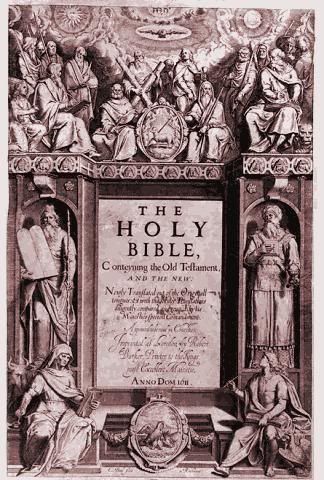
Next, let's get to the good literal translations. You can't talk about good literal translations without mentioning the King James. It sets the bar, and it sets it high. KJV is undoubtedly the most beautiful English translation ever produced. It generally preserves ambiguity where the original is ambiguous, and it is not afraid to bend English syntax here and there when it can be done. The Translators worked long and hard, going through multiple levels of peer review, and the result is a monument of Anglican scholarship. There are some problems, however. English has changed a great deal. Words mean different things now. I'm not just talking about 'thee' and 'thou.' I'm talking about 'rest' and 'conscience' and 'justification.' We think we understand these words, so much that the modern translators usually continue to use the same, but they meant something different 400 years ago. The King James translators were very right to use them where they did, and the modern translators are very wrong. In addition, there are places were our understanding of this or that Hebrew idiom (including those found in the New Testament) have improved over the years, as has the approach to translation. It is occasionally hard to follow the authors train of thought in the King James. Finally, perhaps the greatest problem is that we have discovered Greek manuscripts of the New Testament that are much older and generally believe to be more reliable than those available to the the KJV translators. My Greek teacher always would say that it was an excellent translation of bad manuscripts. However, the Old Testament is still useful, as is the New when compared with modern translations and a good dictionary may be helpful for getting at those antiquated meanings. I don't particularly recommend the NKJV, by the way, as it basically just diminishes the beauty of the King James without really addressing the weaknesses of the translation.

The other good literal translations are revisions of the King James (in fact... I think most of the bad ones are too). I can speak about three of them: Revised Standard Version (RSV), New Revised Standard Version (NRSV), and English Standard Version (ESV); The latter two being revisions of the first. The ESV being branded as "Conservative," and the NRSV being labled "Liberal." It would be more correct to say that ESV is traditional and NRSV is academic. First off, None of these are quite as literal as the KJV, NASB, or NKJV, but they still follow the original languages quite closely and often also preserve the vocabulary of the King James (unfortunately, in some cases). The RSV is from the 50's, and I think it is the most beautiful translation into modern English. I haven't used it so much, so I'm not in a place to comment on it's strengths and weaknesses further. The ESV very nice in terms of style. It's literal, but it reads smoothly, and preserves the traditional interpretations very well. I have also notices that this is one of the best at avoiding the temptation to over-translate something. If they original is cryptic, they translate it as cryptic in English. The NRSV is also excellent. I prefer it to the ESV because it's interpretative decisions are based more on a thorough understanding of the text as a whole, as opposed to a rewording of traditional interpretation (which is what most of the modern translations amount to). This is also the one of two translation in English that I'm aware of that takes the science of Old Testament textual Criticism seriously (the other is the NET Bible, mentioned above). I can't go into what that means right now, but believe me that it is one of the best if not the best translation of the Old Testament out there. The New Testament is also great. The NRSV is the standard in the academic world as well. The NRSV is also an Ecumenical work, with scholars from all branches of the church including Roman Catholic, Orthodox, Mainline Protestant, Evangelical, Pentecostal, and so forth. They even had a Jewish guy working on the Old Testament. It has been approved for use by more denominations than any other. Evangelicals don't like it because it says "young woman" instead of "virgin" in Isaiah 7. To that, I say who cares?

One literal translation that I haven't checked out too much yet is the NAB, New American Bible. It's Catholic, and I hear that it's very good, but it does suffer slightly from the fact that it necessarily must uphold Catholic doctrine. Still need to get my hands on this one and see how it is.

Finally there are the idiomatic translations that I like; TNIV (revision of the NIV), HCSB (Holman Christian Standard Bible), and New JPS (Jewish Publication Society). The TNIV is what I generally use for my devotions. It is awesome. Very similar to the NIV, but improves upon all the weaknesses. Tends not to over-translate as much. Makes decisions in light of the argument of the book, and re-evaluates the value of traditional vocabulary at certain key points. Great. There are still a few dodgy bits in the Old Testament, but it's a lot better. HCSB is a Baptist translation. It likes Baptist doctrine. I realize this sounds awful, but it's not. They have made good use of their lexicons and come out with some brilliant translations. Not as strong as the TNIV, but very useful for comparison. It's actually also quite literal, come to think of it, but it still feels smooth and modern to read. Good translation there. Occasionally some senseless interpretive decisions, but what the heck, they're Baptists. The New JPS is a Jewish Translation. As you might guess, it's only the Old Testament. It gives a very good sense of the Hebrew in very readable English. It competes with NRSV and NET as best translation Old Testament, though it sticks to the traditional Jewish text, and doesn't touch textual criticism. Of course, they do their best to translate in such a way that would obscure the Messiahship of Jesus, but it's still pretty obvious if you ask me.

In summery, the best translation by far for study of the text is the NET Bible. Other favorites translations are NRSV, TNIV, JPS. I also like KJV and ESV because they are quite beautiful, though they have problems (the modern reader will probably get more millage out of the ESV, by the way).

Of course, nothing beats the originals in terms of beauty and clarity... (but the notes in the NET Bible still rock...)

Translations Disclaimer!!


I'm in an Old Testament class here were someone asked the professor, Dr. Baruch Schwartz, which translation he recommended for those not using Hebrew. He recommended the JPS, a modern Jewish translation that has a similar translation philosophy to the NIV, but almost always gives much better renderings of the Hebrew text, and of course, slants the translation in a way that is more harmonious with Jewish belief. He also mentioned that, in the class, he would like to get as many different translations as possible. Another student wanted to clarify and said, “So, the JPS is a good translation?” to which the professor replied, “No, it's terrible. They're all terrible. You can't capture the richness of the Hebrew in any language except Hebrew. If you need a translation, just bring whatever is the easiest for you to understand, and we'll discuss the text in class.” It's like the old saying, “There is no error in translation. Translation itself is an error.”

But, this is just how we talk in the Academy. If everyone read Hebrew and Greek, that would be wonderful, and we wouldn't have to walk around with these rubbish translations. In fact, I'd recommend that any Christian learn the languages of the Bible even if you only have the least bit of time or inclination. Just don't stop half way and start using these interlinears...

However the study of Greek and Hebrew does not become a reality for most people. Some people don't have the time, or the aptitude, or the finances, or the motivation. Motivation is kinda a lame excuse, since we're talking the words of God here (what could be more important?), but the others may at times be valid.

In any case, there are more important things for understanding the text than the original languages. On of these things is a good understanding of the Ancient world. If you have to pick whether to learn Greek and Hebrew, or to read Josephus, Hammurabi, and Gilgamesh (a question facing most of us every day), go with Josephus and friends. I can highly recommend the recent “Archaeological Study Bible” for help in this area. The text comes alive in context. Another important thing, perhaps the most important thing of all for understanding the bible is to look at each book as a whole. If you understand the flow of thought and internal logic in an entire book, the individual verses will almost always fall logically into place. Some of the larger prophetic books and the Psalms are more of collections than “books”, and require a different approach, but that's another matter. “How to Read the Bible for All its Worth” is an excellent book to explain this idea in detail. They have their own discussion of English translations there as well.

Anyway, back to translation. Before getting on to discuss any of the individual translations, I just want to mention what some of the difficulties are with translation and various methodologies.

Literal translations are great if you know Biblical languages. They can give you a pretty clear idea of the words and syntax of the original, and are very handy for study when you can't lug around a dictionary. However, this raises the question of why you are studying a translation if you know the original languages. If you don't know Greek and Hebrew syntax or semantics, the important question comes up of what can actually be gained from seeing a translation that follows it. If you don't understand things like Greek cases, tenses, and moods, and how all those things fit together to create meaning, there is really no point at all to have literal translations of them. There is a German translation that I love called Elberfelder. It is extremely literal. It's almost like reading Greek in German words. The only problem is that it's not quite German. I don't know how Germans that haven't studied Greek get along with it. It's great for preaching because it gives you a lot of opportunities to explain Greek idioms, but for a normal person to read, I don't know. Of course, my grasp of German syntax isn't perfect either, so I may be missing something there.

Furthermore, in the Old Testament, I'm going to go ahead and say that it is absolutely impossible to make a literal translation of the Hebrew in many cases into any modern western language. The verb system and syntax of classical Hebrew, translated literally has no sense in English. Greek is usually somewhat intelligible when translated literally. Hebrew is not. Let's make a literal translation of the most famous passage in the Old Testament (and one of my favorites) for a little demonstration. The dashes indicate where a single word in Hebrew contains all the semantic information joined together in English.

“Hear Israel, Yhwh Gods-us Yhwh one.
And-you-loved (untranslatable word) Yhwh Gods-you, in-all heart-you and-in-all soul-you and-in-all strength-you.
And were the-words the-these which I commanding-you the-day over heart-you.
And-you-pierced-them to-sons-you and you-spoke in-them, in-to-sit-you in-house-you and-in-to-walk-you in-the-way and-in-to-lay-you and-in-to-rise-you.”

This doesn't make any sense at all. In fact, in this case, as in most cases, a literal translation of the verb form in Hebrew absolutely does not mean what the Hebrew means. You see a lot of past tense forms, but that's not what the Hebrew means at all. In Hebrew, you only understand a verb form by it's relationship to all the other verbs. Strange but true. As for what I have written, I don't even understand it myself. It's senseless. In any case, for several of the words, I still had a few semantic options for how to translate because no English word means exactly the same thing as a Hebrew word. There is still, even in this extremely literal translation, interpretation. This translation is not helpful in any way, literal though it may be.

Just to rectify the situation, let's translate this into what I believe to be the meaning in English. I say that because there is necessarily more interpretation being done with this kind of a translation. This is still quite literal, but it makes sense in English. I use a lot of vocabulary that isn't in the transitional translation because it provides a closer semantic correspondence between the English and Hebrew, I believe.

“Listen Israel, Yahweh is our God, only Yahweh. Love Yahweh, your God, with your whole mind, with your whole being, and with your whole ability. These things that I'm charging you with today must be on your mind. Impress them on your kids, and talk about them... when you sit in your house, when you walk on the road, when you lay down, and when you get up.”

This is very different, you see. I can't guarantee you that this is exactly what Moses meant (or “D”, or whoever), but I will promise that it's infinitely closer than the meaningless gibberish in the previous translation.

Why can't I guarantee it? Because to translate it at all, even in this relatively literal format, I have to interpret some words. The number “one” in Hebrew can also mean “only.” It can mean “alone” or “each.” Some people think it can mean “first,” (though I have my doubts about this). The word “soul”... we don't have a word that means exactly this in English. It can mean, as I have translated “being.” It could also mean “life-force,” “person,” “inner being,” “spirit,” “identity,” “self,” etc... This words can mean any of these things (though it never exactly corresponds), but in any given case, it only means one thing. You have to figure it out based on the context. Another word in this verse, the one I first translated as “pierced,” and again as “impress,” only appears with this form once in the Bible. It's impossible to know exactly what the meaning is, aside from that it is in some way related to “sharpen” on one hand, and "tooth" on the other, but it is difficult to say exactly how. The point is clear: the text is supposed to become part of who your children are. It is instrumental in their formation. How exactly to say this in English while remaining semantically faithful to the original is difficult.

No matter how literal a translation is, the translator must make a subjective judgment about the meaning of the text. That's one of the reasons the King James translators said “a variety of translations is useful for discerning the meaning of the scriptures.” and included in the margins a healthy complement of translation notes, which have unfortunately been removed from most print editions (Hendrickson Publishers has a nice facsimile of the 1611 edition that retains them, and a good many other helpful features present in the original, not to mention the delightful archaic spellings, soe saithe vnto thee ye olde translation).

Now, there are good ways and bad ways to make these decisions about the meaning when you translate. Ideally, you leave same ambiguity when the original is ambiguous (however, ambiguity that gives options of meaning impossible in the original text are a very bad thing), and you make the meaning clear when the meaning is clear. It is the unfortunate reality that occasionally a literal translation will obscure a meaning that is very clear in the original language simply by being literal. The other way to make good decisions in translation is by study of the whole text. You understand the argument of the whole book, and make your decisions based on the message of the book. In this way a translator nearly becomes a commentator. There is also the important role that the translator plays in choosing the proper base text, but I don't want to get into that at the moment, as it is at least as complex as the act of translation itself.

It's not at all bad that there is interpretation in a translation. We have to interpret the text to live it out. I only say all this to demonstrate that you can't take any particular translation too seriously in terms of being “authoritative.” They are all interpretations. They all have strengths and weaknesses as interpretations, and those are not necessarily tied to being “literal” or not. There are good and bad literal translations, just as there are good and bad idiomatic translations. There are several translations that I like very much, and most of them fall somewhere in the middle of literal and idiomatic.

Sunday, October 11, 2009

Out of sight and out of mind


Time for an interdisciplinary tidbit.

I read about a study an Israeli scientist did with Finnish, American, and Israeli children recently. It dealt with the way language affects thought.

In Hebrew, you find gender in every noun, every adjective, and almost every verb. In English we have a few nouns with obvious gender endings, but it usually only shows up in pronouns. In Finnish (which I know less about), there is no gender for pronouns, and seldom for nouns. The study found that Israeli children universally come to a realisation of gender identity before Americans and Finns. Americans usually figure it out before Finns, but the correlation is not as strong.

That is totally irrelevant to this website. Here's what isn't:

In Hebrew there is one form of past tense. On occasion, they will use a periphrastic construction when they want to emphasise process (ie: 'I went' as opposed to 'I was going'), but this is more a part of the literary idiom, and is somewhat rare in everyday speech. In English, we have about five or six nuances of past tense that are used in every day speech (I went, I have gone, I had gone, I was going, I have been going, I had been going).

The same study found that Israeli tots have much more difficulty remembering chronology, even to the extent that they don't recall very well if something happened yesterday or the day before, or last week.

If you can't figure out what this has to do with our Jewish histories recorded in the Bible, think harder.

Friday, October 9, 2009

Hebrew Matthew


Internet was down yesterday. Here's the stuff:

Let's go over what we know about the synoptic gospels:

They are all very similar, as anyone who has read them back to back or side by side will know. The early church tells us that Matthew came first, then Mark, and then Luke. Therefore, it was said for a long time that Mark condensed Matthew, and Luke used Matthew as well but supplemented it with his own material. There are some problems with this, if one investigates the Greek text. Mark has bad Greek. It's fairly clear that he's a non-native speaker doing the best he can to tell a good story in a foreign language (and he does a pretty good job, I'd say). There are places where Matthew and Luke are obviously correcting Mark's Greek to reflect the proper Koine (or occasionally Attic) idiom. It is therefore regularly assumed that Mark was composed first, and the others follow. A lot of folks like to suggest that the fathers were just making stuff up because they liked Matthew the best (they do use him the most).

What else? There are a lot of sayings where Matthew and Luke agree that are not found in Mark. Did one use the other? Well, many people think this is unlikely because if they had, their narrative would agree more (their narratives disagree fairly often). Therefore, it is said that they must have shared another source, which we usually name “Q.” You'll know what I think about that if you've read my first post.

Take a quick peek at my post from June 15th. It's about a document we don't have that the fathers mention fairly often, a Hebrew version of Matthew. In fact, our earliest witnesses, Papias (c.125), tells us two very interesting things. One is that Matthew compiled the sayings of Jesus in Hebrew. The other thing he tells us is that each one interpreted them as best they could. Here, we actually have one of the church fathers attesting what scholars have been assuming, that there was an early sayings source utilized various evangelists and teachers at the time. Recently, some scholars have also been suggesting that there must have been a Hebrew or Aramaic source used for the sayings of Jesus (particularly Robert Lindsy and the Jerusalem School of Synoptic Research).

Well here it is, right here in the fathers; the first place we ought to look, and the last place anyone does. Furthermore, Irenaeus (c.185) gives us a time-frame (Paul and Peter were founding the Church in Rome during the sixties), and possibly a location for the composition of this document ('among the Hebrews;' dare I say Palestine?). I'm liking this Hebrew Matthew more than Q already!

And what has this to do with the composition of our canonical gospels? To state briefly, I would like to suggest that this was the sayings source used by Greek Matthew and Luke in addition to Mark. What about it's content? Well, when one observes the structure of Matthew, one finds five long discourses surrounded by narrative pericopes. When Matthew does disagree with Mark, it is often with regard to the chronology of this material, so as to preserve the integrity of the discourse. I would tend to guess that, in these five discourses, one pretty much has the basic content of Hebrew Matthew. Of course, that is just a guess. Non-extent documents are non-extent (or undiscovered), and I don't want to go over board with this theory, since I think one of the great flaws of modern Gospel scholarship is conjecturing about documents and community histories that nobody has ever heard of, and ignoring the vast wealth of information we actually do have preserved by folks like Eusebius, Josephus, the Rabbis, and others; not to mention the text of scripture itself.

So what does it all mean? Before I bring together all my thoughts on the issue, I'll need to discuss the roll of oral tradition in the transmission of the Gospel in early times, and how that affected the shape of our Gospels. Only after considering this oft neglected reality can we complete the picture.

Wednesday, October 7, 2009

Jesus and Isaac.


בנך יחידך

I realize I'm not the first person to have discovered that there is some connection between Isaac and Jesus. However, I always heard it said that Isaac was a type of Christ. I tend to be very weary about this term type. Isaac was Isaac. His story first and foremost tells us about Isaac, though it story is rather short and uneventful in comparison with both the story of his father and that of his sons. Why have people insisted on making a connection between Jesus and Isaac?

Well, there are some Greek and Hebrew words that started it all. In John, Jesus is called the monogenes of God, which we translate variously as the “Only Son,” or the “Only Begotten,” or sometimes “One and Only”. So what? Isaac wasn't Abraham's only son, was he? Well, not exactly, but in Genesis 22 (the story of the sacrifice of Isaac), God calls Isaac Abraham's yechid, Which means, more or less, 'only son'. When Josephus retold the story the sacrifice of Isaac in Greek (Ant. 1:13), he used that Greek word, monogenes, and in fact, so did the author of Hebrews (11:17; The LXX translates the word as agapaton, 'beloved'; a loose translation, but it will also become important).

Why would God call Isaac Abraham's only son? What's Ishmael, chopped liver? Well no, God also blesses Ishmael, and he turns out to be quite a good chap in the end, and has lots of kids, with whom I am becoming acquainted here in Jerusalem (and yes, they are at strife with their brothers). However, Isaac is the only son in a legal sense. He gets all of the inheritance, and he gets all of the blessings. Interesting.

Now, it may be recalled that while the circumstances surrounding Jesus birth were quite extrordinary, he was not really Gods only son. Paul implies, and Luke outright says that Adam was also God's son. By proxy this means (as Luke records Paul saying in Athens) that the whole human race are God's children. In the Old Testament, Israel is also called God's Son, and Jews still refer to themselves as such. But John calls Jesus the only son. This does two things: first, it establishes him as the son of the inheritance (not Abraham's inheritance, necessarily, but actually God's inheritance). The second thing is that it ties Jesus very closely to another story of a father who went out to sacrifice his son. Josephus reports that Isaac was twenty five when he was Sacrificed, and the Talmud says 37. Not a small child. They also report that when he discovered his father's intentions, he willingly went along because it was the will both of his father and of God. John draws on this tradition to explain, in a very Jewish way, the nature and significance of Jesus' son-ship.

I'd like to point out a couple other parallels that I think John may have intended, but perhaps are not quite as blatant in the text. For one, Isaac's story is oddly similar to Abraham's. He marries one of his relatives, he lies to Abimelek about his wife, he builds alters and sacrifices to God, he digs wells, he prospers greatly, etc... Isaac does what his father did. John repeatedly emphasizes that Jesus does the same things as the Father, and that Jesus is essentially carrying on his work. Another thing about Isaac is that, while Abraham was the father of Israel, it is through Isaac. Isaac was the immediate father of Jacob, Israel. John is very clear that those who believe in the Son also become son's of God. That is, God is starting his own nation that will be reckoned through his only Son.

Furthermore, Genesis also mentions that Abraham had dug wells, the Philistines had stopped them up, and Isaac re-opened them. I won't go into that too much, as it's very speculative, but I will allow you to draw your own conclusions based on the significance of water and wells and the presentation of the Jewish leadership in the Gospel of John. But where did John get these ideas? Well I think it has roots in the life of Jesus himself.

When Jesus was baptized there was a voice that said, “You are my Son, my beloved. I am delighted with you.” We often see the connection with Psalm 2:7, where it says “The LORD said to me, 'You are my Son. Today, I have begotten you.'” We take this to be a reference both to his divine paternity and his Kingship (as it is originally in Psalm 2). I think there is a connection, but that isn't the only connection one can find, It's just the most obvious in English. If you were a good Hellenistic Jew or Christian in the first century, you would know that in your LXX translation Genesis 22, God repeatedly calls Isaac “Your son, your beloved,” as a translation of yechid, 'only'.

Now, I wasn't there when God spoke, but if I were a betting man, I'd say (assuming God was speaking Hebrew, which is reasonable for that place and time) he called Jesus his yechid. We still have the echo of Psalm 2, but we have a much stronger echo of Genesis 22. I believe the Gospel writers recognized this very well, and chose a translation that would alert their readers to look into the correct scripture. Too bad our translators haven't done us the service. (Not that they can really be blamed for giving us literal translations of the Greek and Hebrew, respectively). Another connection is in a little recounted story of Isaac where it says that there was a famine, but God told him not to go to Egypt, so he moved to Gerar with Abimelek and blah, blah, blah... and (Gen. 26:12) 'Isaac sowed seed in the land, and in the same year he reaped one hundred fold.' Wait... what? He sowed seed and reaped one hundred fold? Kinda reminds me of another story about a sower who sowed his seed and reaped one hundred fold...

Better to same that one for another time...


PS: I realize I totally crapped out on that lectionary thing. I did begin research for posts about it, but it was a lot lot lot of work, an usually by the time I could get sorted about the readings and their relationship, the week had long past. If I was a preacher, and it was my job to preach from the readings every week, I would definitely do it, but I don't really have the time.

By the way, I think I'm going to post my conclusions about Hebrew Matthew tomorrow.

Tuesday, July 28, 2009

Fun with the Lectionary: prequel


There is a story of a Rabbi who was teaching in a synagoge, and as he preached, he tied together different passages of scripture. As the words came out of his mouth, fire flashed aroud him and set the people's hearts ablaze. People asked him what had happened. He told them that in the beginning, the words were together on the mountain of God, wrought in flame before he gave them to Moses. When one puts the words from one section of scripture together with the words of another, they rejoice to be in one anther's presence, so much so that flame again as when God made them. This is how the rabbinc Midrash developed, and that is how they often teach in the synagoge today, bringing the words from different places together as they were in the beginning.

As some of you may know, I'm probably going to become Anglican when I move to Jerusalem. As in most liturgical chruches, the Church of England follows a regular schedule of scripture reading called a lectionary. When the Church of England was first established, the lectionary was super hardcore. There were four readings per day, and you would read through the whole Bible in a year. In addition, there were like 5 Psalms per day, so you would read through the whole book every month. The Anglican liturgy has developed over time, but in 1994, they, along with the majority of other English speaking liturgical churches, adopted the Revised Common Lectionary for Sunday service. The Revised Common Lectionary (RCL) was created by the Catholic Church, and was found to be an acceptable standard by some ecumenical council.

The lectionary itself runs on a three year schedule. Each year, they go through one of the first three Gospels (though they skip some bits), and use passages from John around several holidays. In addition, there is always a reading from another book of the New Testament (that goes roughly through a book, but skips as well). There is also a Psalm and an Old Testament passage every. These are generally chosen in a more topical way as they relate to the Gospel and New Testament readings.

Generally, there is a thread running through all of the readings. Though it is sometimes difficult to see the relation to the selection from the Epistle, there is usually some slight connetion even there.

A skilled preacher can make could make a sermon using all of the readings to interpret one another.

I think I'm going to base some studies for this blog off the weekly passages from the Revised Common Lectionary. Look for the first one late tonight or tomorrow.

And I haven't given up on Hebrew Matthew yet. It's coming...

Saturday, July 4, 2009

John's realized eschatology and the destruction of the Temple.


John is often seen as presenting the end of time as a present reality. This is true, in lesser and greater measures, for all of the New Testament, but it is perhaps most explicitly stated in John. "Whoever believes in me has eternal life" In John's gospel, the word that get's translated as "eternal" is aionios, related to the word from which we get "aeon" or "age," and has to do with the Jewish belief in an coming age were God would set everything to right (by the way, the real Greek word for "eternal" is aidios, if anyone wants to fact-check me).

John makes every effort to tell his readers that if you believe that Jesus is the son of God, you are living in that age. Of course, there are also a few promises of "resurrection on the last day," in chapter six, so it's not quite as cut and dry as some commentators would like us to think. However, to me, it seems clear enough that John pictures a qualitative change that takes place in the life of the believer, but does not deny that the final day has not yet been realized, and the resurrection is still in the future.

But there is another side of the coin. In scripture judgment and salvation are always tied together. Now, John has a lot of talk about judgment; mostly that the Father has handed all judgments over to the Son. However, there are only two places where a timeframe is given for this judgment. One is in 3:18, "The one believing in him is not being judged; but the one non believing is already has been judged, because he has not believed into the name of the only begotten Son of God."

The other place is in 12:47-48, "If someone hears my words and does not keep the, I am not judging him, for I did not come to be judging the world, but that I would save the world. The one who rejects me and does not believe my words has that which judges him: The word which I have spoken will judge him on the last day."

Hmm... difficult. Is there a two-tiered judgment on the unbeliever to complement the regeneration and resurrection of the Believer? Well, to some extent, there is a sense that those who believe are moving from death to life (John 5:24), and this could constitute the present judgment of the unbeliever. I'm not sure about this, as I tend to see this categorization as a reflection of the final judgment, rather than a present state. Many unbelievers are very much alive. It has been suggested that they somehow experience the curse of living under judgment. This may be so, but you will have a heck of a time getting most of them to admit it.

Let me suggest that something else going on in this verse (without denying the possibility that unbelievers may experience their judgment in the present, in one way or another.

In Jesus conversation with Nicodemus, he refers to himself in a way that is typical in the Synoptic Gospels, "The Son of Man." In 3:16 we begin to see the title "Only begotten Son." This is a signature title of the evangelist. Most commentators agree that this is a place where the evangelist is explaining the significance of what has just been said.

Now, we must remember that John is writing perhaps some fifty some odd years after the conversation. Ten years or so before John wrote, one of the most significant events in the history of Judaism occurred: The temple was destroyed by the Romans during the Jewish war. Those who stayed and fought the Romans were destroyed by them, those who deserted, following Jesus’ orders (Luke 21:20-24), lived. There is a very real sense in which the early Christians saw this as God’s judgment on the Temple establishment.

Simply to say that John is referring to this and leave it at that is not sufficient. It is a bit vague; though the destruction of the temple was well know to all in John’s world.

The pericope immediately before is that of the cleansing of the temple, which John has moved purposefully into this position for some reason or another (contra the Synoptics). Now, John does not specifically mention the destruction of the temple in this context (well, he does, but apparently referring to Christ’s body), but the whole episode would sound a jarring note with his audience, in light of the fact that the temple had recently been destroyed. Furthermore, the story following this also has a teaching about the soon-coming irrelevance of the physical temple. Jesus, in more ways than one, is setting himself up as the replacement for the temple, and makes it irrelevant to the faith.

In light of these things, as well as historical events, I think it would be wise to consider that the present judgment of John 3:18 (which in not present, but actually emphatically past), could very easily refer to the defeat of the Jewish nation and the end of the temple establishment.

This probably isn’t that interesting to most people, but I’ve been arguing with a retired Lutheran professor about this very issue at his excellent bible study that I’ve been recently attending. I love bible studies that are actually about the bible. For some reason, none of the commentaries I’ve been able to consult seem to make any connections between the destruction of the temple and the composition of John. Weird. Seems like a pretty big deal to me.


Edit: I'm very interested in input on this topic. I haven't totally convinced myself on it yet. Still seems shaky.